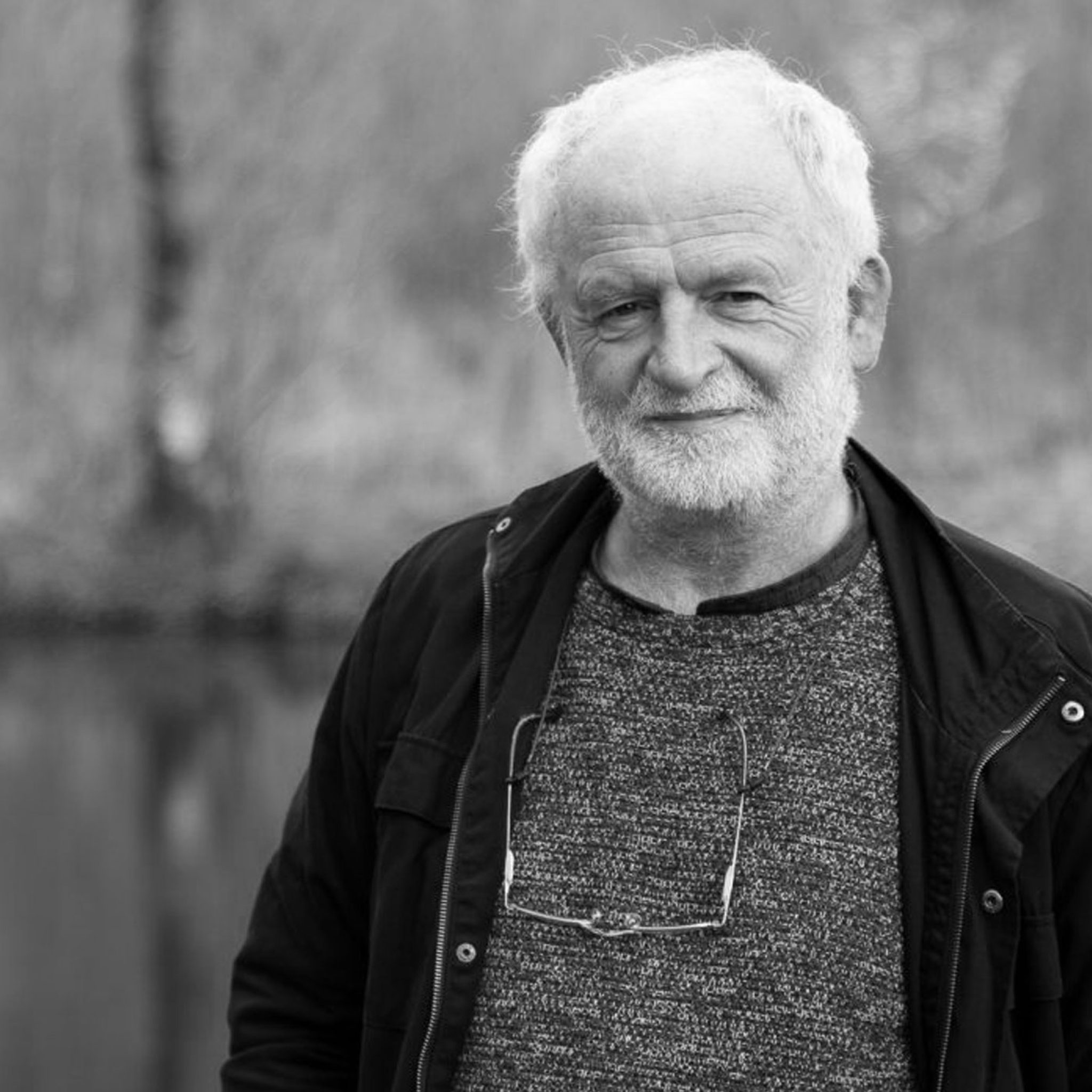
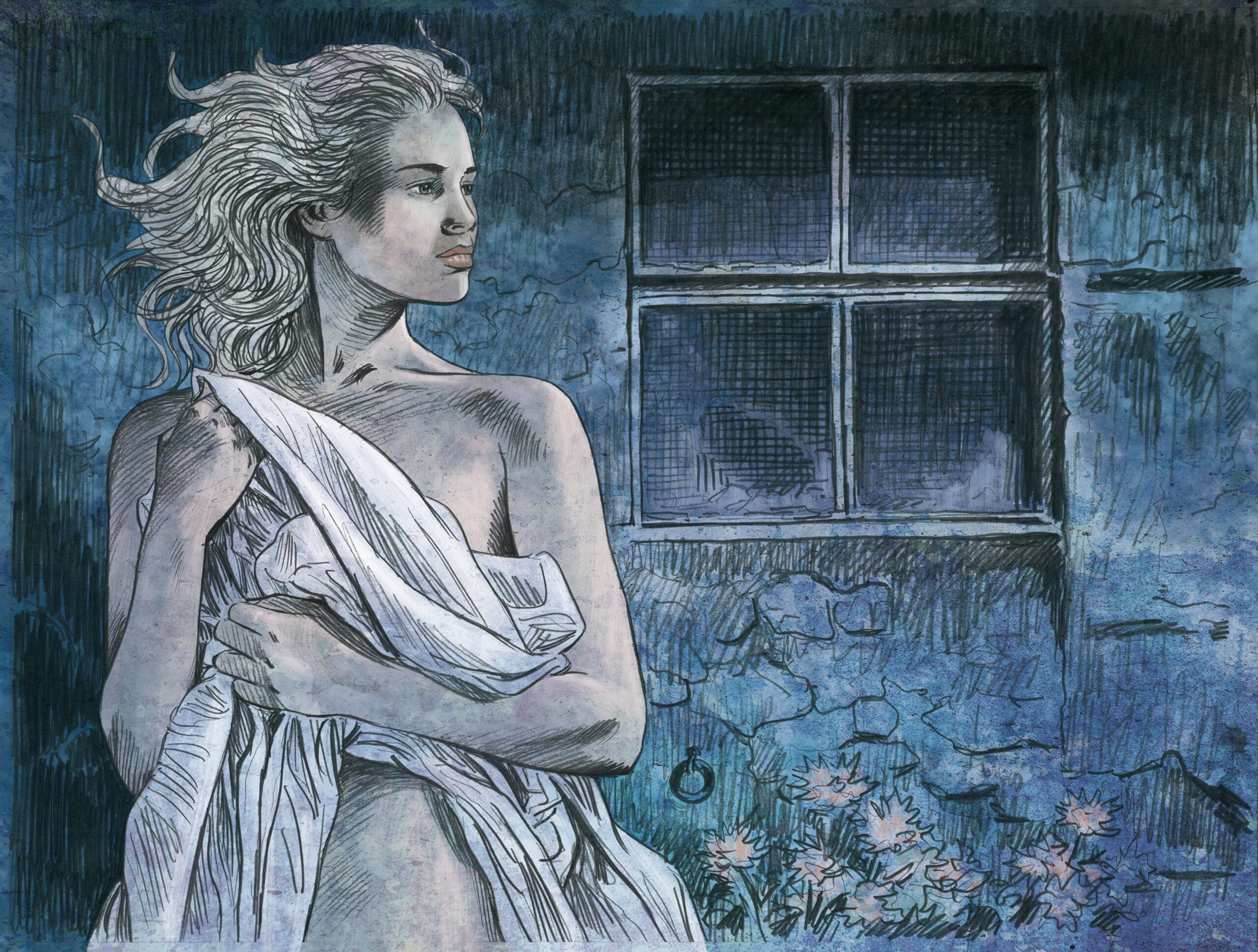
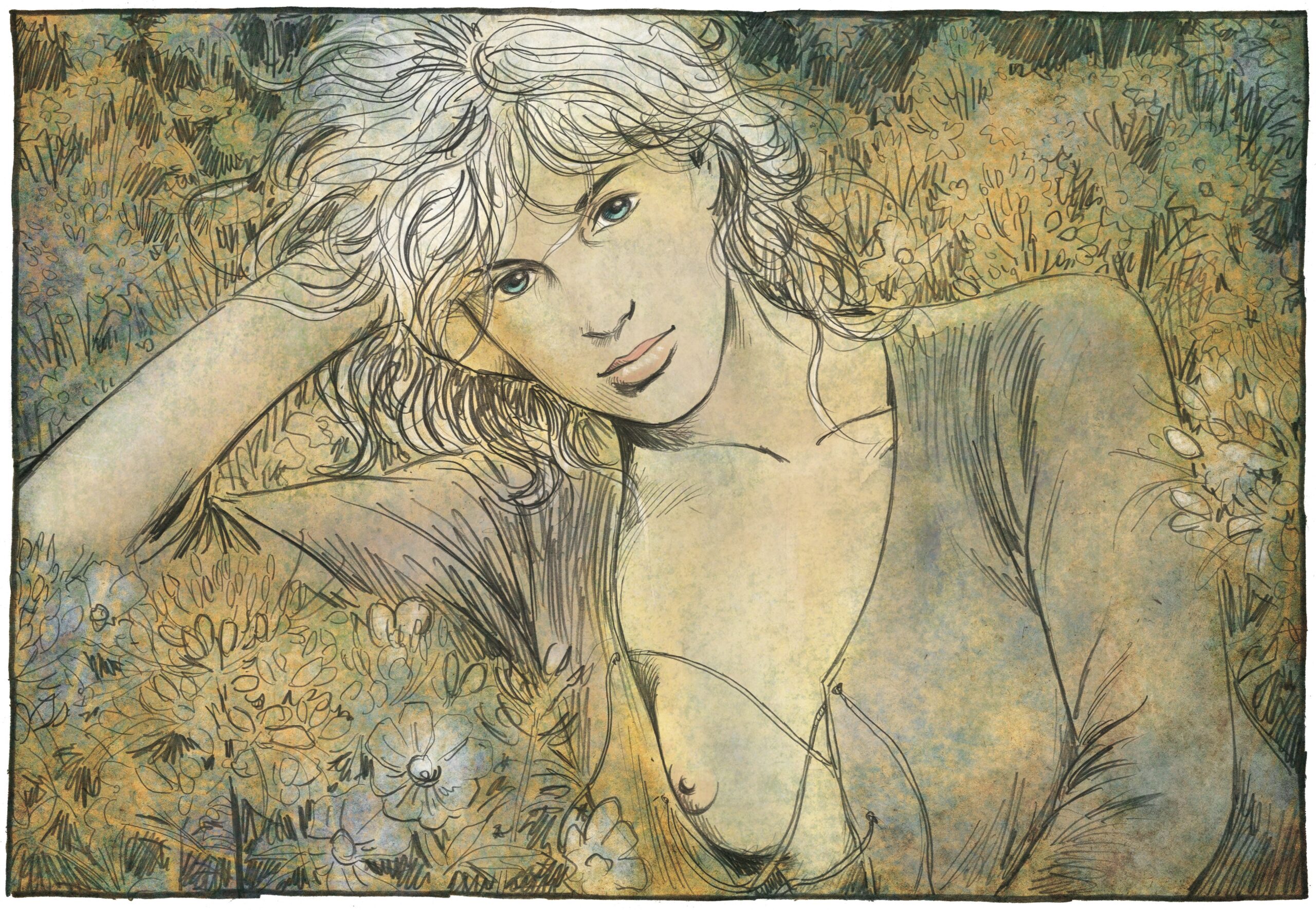
Jean-Claude Servais’s childhood was shaped by the countryside: walks, games in the rivers and friendships marked the holidays and weekends spent with his grandparents in Jamoigne.
Believing that his son could not earn a living from drawing, his father hoped it would remain a passion. But Jean-Claude’s love of drawing was too strong, leading him to enrol at Saint-Luc in Liège.
In 1975, before completing his studies, he made his debut in Spirou through its Carte Blanche and Découvertes Dupuis features.
In 1976, his childhood memories and the contrast with city life prompted him to leave Liège and return to his roots. His grandmother, widowed and living alone, welcomed him into the house that would become his home.
Based in the Gaume region, he is married and has three children.
Working with Gérard Dewamme, a teacher he met during military service, he published Tendre Violette in issue 15 of À Suivre in 1979. It marked his breakthrough and the beginning of his success.
La Tchalette, Iriacynthe and Tendre Violette appeared with three different publishers. His collaboration with the artist Julos Beaucarne marked a turning point in his style.
In L’Appel de Madame la Baronne, the two artists take readers on a poetic journey between their worlds. L’Almanach, published in 1988, presents a distinctly anticlerical perspective through a tale of legend and witchcraft.
Next came La Petite Reine, a thriller set in Virton involving killer bees.
The two volumes of Lova followed, telling the story of a wolf-child in Gaume. The Aire Libre collection then brought Fanchon, a nostalgic love story and a return to one’s roots, and Déesse blanche, déesse noire, a fantastical fairy tale.
The two volumes of L’Assassin qui parle aux oiseaux appeared in French and in the Gaume dialect. Jean-Claude then wrote the original script for Princesse Talia. The first part of this magical play, Le Monde du dessous, enchanted the Caves of Han throughout the summer of 2009. The second part, Le Monde du dessus, remained unproduced.
He also embarked on a major historical work, Orval. Through selected episodes, it explores the foundation, influence and decline of Orval Abbey, portraying two very different men whose destinies are linked by the abbey.
On 25 May 2010, the Fourneau Saint-Michel museum in Saint-Hubert honoured Jean-Claude Servais by dedicating the Malvoisin cottage to his work. This emblematic building of the rural life museum provided a fitting setting for a permanent exhibition, with his drawings displayed throughout the house.
Jean-Claude Servais has also been honoured for his contribution to the cultural life of his region and Wallonia, receiving the rank of Officer.